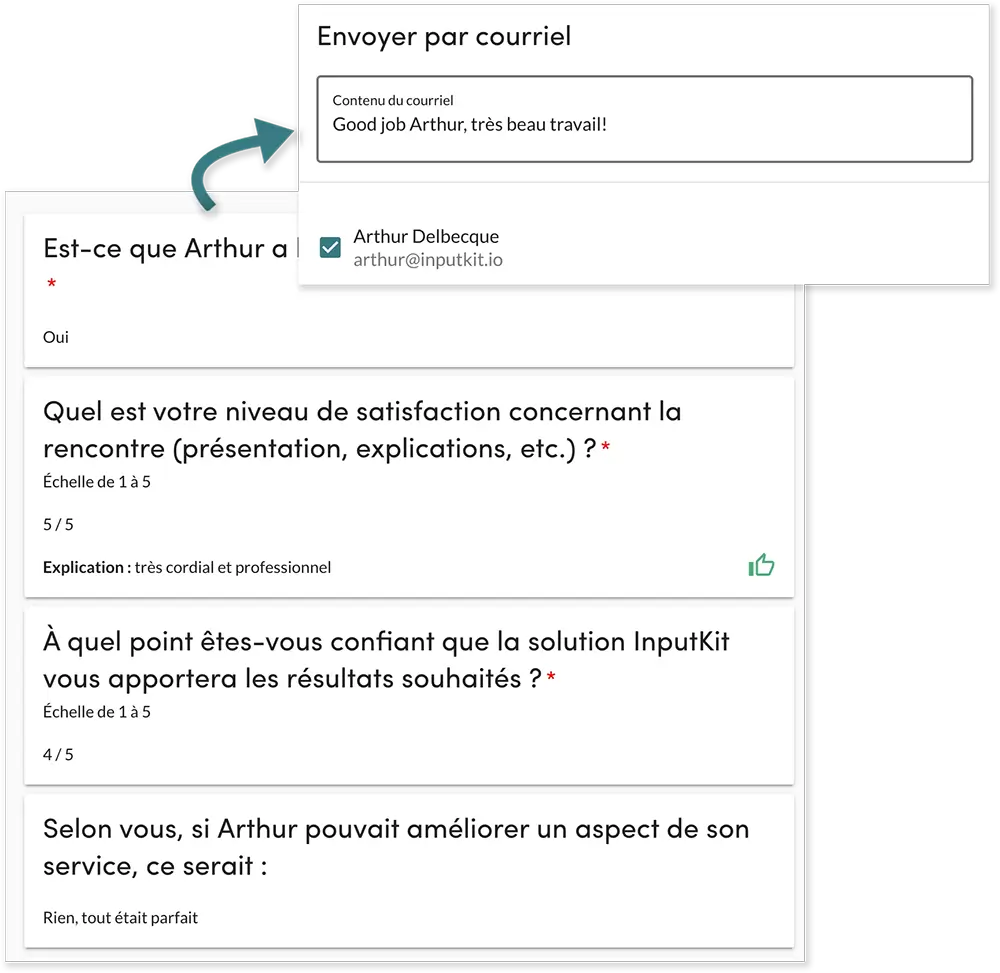

Job satisfaction has become one of the most important challenges for companies looking to retain their best talent. In an era marked by labour shortages and the rise of hybrid work, providing an environment where employees feel fulfilled is no longer a luxury, it's a strategic necessity.
According to the Business Development Bank of Canada (BDC), replacing an employee who leaves can cost up to 200% of their annual salary. Moreover, according to Harvard Business Review, companies that invest in employee satisfaction generate up to 37% more revenue and experience a 21% increase in productivity. These numbers speak for themselves: job satisfaction is a profitable investment, not an expense.
Watch now → FREE WEBINAR: How to become a top employer in today's rising salary environment?
What is job satisfaction?
Job satisfaction is defined as the sense of well-being an employee feels about their work. It encompasses several dimensions: the quality of relationships with colleagues and supervisors, working conditions, recognition received, advancement opportunities, and the alignment between personal values and company culture.
A satisfied employee is not only more productive and motivated, but also becomes an ambassador for your employer brand, making it easier to attract new talent. Conversely, a dissatisfied employee is more likely to look for another job, be absent more frequently, and negatively influence the work atmosphere.
To better understand the foundations of job satisfaction, read our article on the 8 criteria for job satisfaction.
How to improve satisfaction at work?
Increase your team's satisfaction by following these 7 tips!
1. Check in with your employees regularly
 How can you improve satisfaction at work if you don't know how your teams are doing? The first step is to establish regular opportunities for dialogue with your employees. Whether through weekly one-on-one meetings, team meetings, or internal surveys, the key is to create spaces where your team members feel heard and valued.
Implementing employee satisfaction surveys is a particularly effective approach. These surveys allow you to objectively measure your teams' satisfaction level and quickly identify pain points before they become sources of demotivation or turnover. A solution like InputKit lets you automate these surveys and receive real-time notifications when an employee expresses dissatisfaction.
Here are some example questions to include in an employee satisfaction survey:
- On a scale of 0 to 10, would you recommend our company as an employer to people you know?
- Do you feel valued in your current role?
- Do you have the tools and resources needed to do your job effectively?
- Does your direct supervisor give you regular feedback?
- Are there aspects of your work you would like to improve?
2. Offer recognition and praise
Recognition at work is one of the most powerful levers for improving employee satisfaction, yet it is often underestimated. According to Gallup, employees who receive regular recognition are 4 times more likely to be engaged in their work.
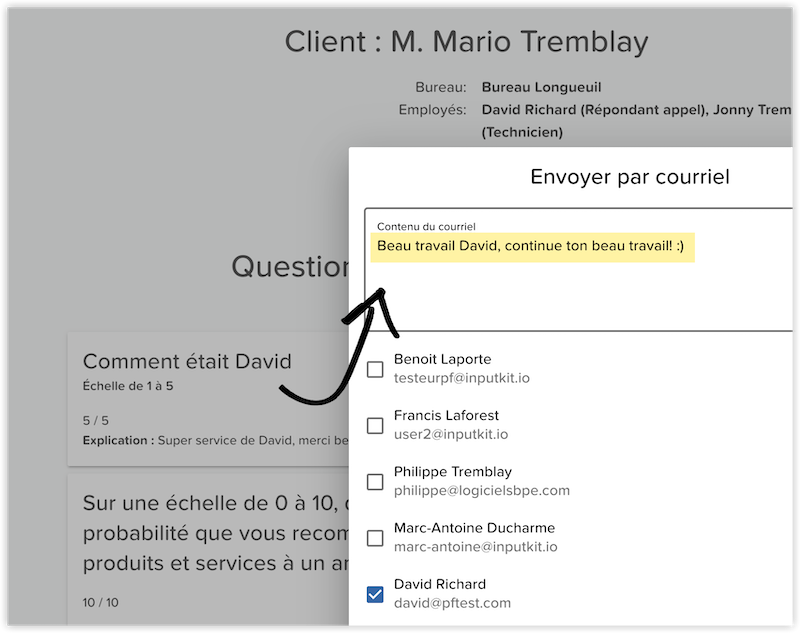
Recognition can take many forms: a simple sincere thank-you, a mention during a team meeting, a performance bonus, or even an email acknowledging an employee's contribution. What matters most is that this recognition is authentic, personalized, and consistent. An employee experience solution like InputKit lets you automatically share positive customer comments with the relevant employees, creating a virtuous cycle of recognition and motivation.
3. Offer training and development opportunities
 According to a study by LinkedIn Learning, 94% of employees say they would stay longer at a company that invests in their professional development. Training opportunities are therefore a key factor in improving job satisfaction.
To achieve this, identify the training needs of each team member based on their current skills and professional aspirations. Offer online courses, workshops, certifications, or even internal mentoring. By investing in your employees' development, you show them that you believe in their potential and want to see them grow within your organization.
4. Create an inspiring work environment
The physical work environment has a direct impact on employee satisfaction and productivity. A well-designed, bright, and welcoming workspace helps reduce stress and stimulate creativity.
 To create an inspiring work environment, consider open collaboration spaces that encourage informal exchanges, dedicated focus zones for deep work, relaxation areas for breaks, and decor that reflects your company's values and culture. If your team works in a hybrid model, also make sure that remote collaboration tools are reliable and intuitive. A good work environment (whether physical or virtual) sends a powerful message to your employees: their well-being is a priority.
5. Be flexible
 Flexibility at work is now one of the top expectations of employees across all generations. It can manifest in several ways: flexible hours, remote work options, compressed work weeks, or the freedom to personalize one's work schedule.
By offering more flexibility, you demonstrate trust in your employees and acknowledge their ability to manage their responsibilities autonomously. This granted trust is one of the most important factors in improving job satisfaction and reducing turnover. Of course, this flexibility should operate within a clear framework, with defined objectives and transparent communication about company expectations.
6. Be transparent with your team
Organizational transparency is a fundamental pillar of trust and job satisfaction. Employees who understand their company's strategic direction, who are informed about important decisions, and who feel their opinion is taken into account are generally much more engaged and satisfied.

To build a culture of transparency, regularly share the company's results, explain the reasoning behind important decisions, and create spaces where employees can ask questions and express concerns without fear of judgment. When challenges arise, communicate them honestly while presenting a clear action plan. Such transparency strengthens the sense of belonging and significantly improves job satisfaction.
7. Continuously measure employee satisfaction with InputKit
To sustainably improve job satisfaction, it is essential to regularly measure the state of your teams and act accordingly. This is exactly what InputKit enables: our employee experience solution helps you automate the collection of feedback from your teams, quickly identify sources of dissatisfaction, and celebrate successes.
Through personalized surveys sent at the optimal time, you get a clear, real-time picture of your employees' satisfaction level. Additionally, InputKit lets you automatically share positive customer comments with the relevant employees, reinforcing their sense of recognition and accomplishment.
How can InputKit help you improve satisfaction at work?
InputKit is the all-in-one solution for managing your employee and customer experience. With our automation tools, measure your team's satisfaction in real time, detect dissatisfaction before it turns into resignations, and motivate employees by sharing positive customer feedback with them.
Our intuitive dashboard lets you quickly visualize your key performance indicators for employee experience and make informed decisions to improve your company culture. By investing in your teams' satisfaction, you create a virtuous cycle: satisfied employees deliver a better customer experience, which generates more revenue and contributes to your company's growth.
Schedule my InputKit demo now to improve my employees' satisfaction
In summary, to improve satisfaction at work, start by checking in with your teams regularly and implement satisfaction surveys. Offer sincere and consistent recognition, provide training tailored to each person's needs, and create an inspiring work environment. Be flexible, be transparent in your communication, and use tools like InputKit to continuously measure and improve your employee experience. By prioritizing your teams' well-being, you invest in the long-term success of your organization.
FREE WEBINAR
How to become a top employer in the current context of rising salaries?