

- Online Reputation
- May 1, 2022
- 32 min read
Get Online Reviews: 14 Typical Mistakes + How to Avoid Them
In 2022, 97% of internet users read online reviews before doing business with a company.
In the same vein, 72% of internet users trust reviews as much as recommendations from people they know. In this context, regularly monitoring the various review platforms has become crucial to ensuring a good reputation for your business.
Download now: 13 templates for responding to online reviews [Free EBook]
Despite appearances, acquiring and managing positive reviews on a daily basis is a complex process that requires several steps.
What is the concrete impact of your customer reviews on your business? How can you optimize your processes to increase your number of positive reviews? To shed more light on the subject, here are fourteen common mistakes in online review management, along with valuable tips on how to avoid them!
Why is online review management important?
In an era where digital is increasingly omnipresent, customer reviews play an important role in the decision-making process of internet users. Reviews have become a source of reference, but also of visibility for businesses. As a result, it has become essential to manage them properly to ensure your company's success.
To better understand the influence of online reviews, here are six direct impacts of reviews on your business:
- Your reviews give you an opportunity to interact with your customers: Responding to your negative reviews is a golden opportunity to resolve customer dissatisfaction. This interaction will allow you to learn more about your customers' point of view in order to improve their experience based on their feedback. This way, you'll show internet users that their opinion matters while also optimizing your customer experience based on their actual needs.
- Internet users do more research before making a purchase: As mentioned earlier, most internet users take the time to gather information before making a purchase. In that sense, it's crucial to take care of your reputation to show your prospects that you're trustworthy. Many online reviews will allow your prospects to learn about the quality of your services and confirm your reliability. It's a great practice for building a trust relationship with your future customers!
- Positive reviews reinforce your credibility: According to a study by OnDeck, 72% of customers will only do business with a company if it has many positive reviews. With that in mind, make a point of regularly acquiring positive reviews from your satisfied customers. This will make it easier to acquire new prospects while improving your search engine ranking.
- Positive reviews increase your annual revenue: Did you know that 96% of purchases come from products with four-star ratings or higher? So make a point of asking your customers about their satisfaction with the product they bought. Doing so will significantly boost your annual revenue!

Common mistakes in online review management
Now that you know the importance of customer reviews, you need to optimize your processes to improve their management. However, asking for and responding to online reviews can become a real headache, especially if you're not familiar with the various customer review platforms.
How can you optimize your customer review management? And how should you respond to online comments to project a strong brand image? To help you out, we cover fourteen common mistakes in online review management and explain how to avoid them.
1. Not responding to reviews on your customer review platforms
Imagine: you're shopping online for new clothes. You come across a boutique that, at first glance, looks ideal. However, as soon as you try to look up the quality of the boutique's service, you realize they don't seem to take the time to respond to customer comments.
No employee bothers to respond to customer reviews on the various platforms you check. Satisfied customers feel like their review barely matters to the company. Dissatisfied internet users, meanwhile, are left without the slightest support. This is clearly an example of poor customer review management!
According to a study by BrightLocal, 89% of customers will favor a business that responds to their online reviews. Make a point of responding quickly and regularly to online reviews on your various platforms.
Thank your satisfied customers for their time and assure them that their good comments motivate your employees to give their best. In case of customer dissatisfaction, apologize for the bad experience, then note the customer's complaints to fix any flaws in your customer experience. Finally, offer a solution related to the issue raised. This way, you'll be able to improve your customer experience through your online reviews while showing your customers that their well-being is a priority.
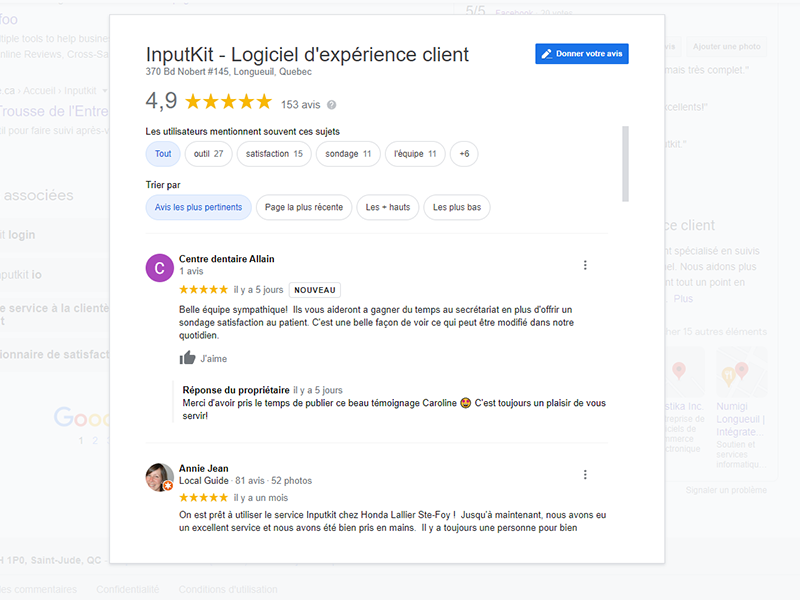
2. Deleting negative Google reviews
The key to your business's success rests partly on customer acquisition and your online visibility. With that in mind, you probably want to show internet users that your organization is trustworthy.
Of course, it can be tempting to delete the negative online reviews that are hurting your Google Business Profile. However, before taking action, do you know the actual impact of such a practice on your business?
According to a study by Oberlo, 62% of customers are wary of companies that censor their customers' negative feedback on online review platforms. Moreover, deleting your customers' Google reviews is strictly forbidden when they aren't spam or fake reviews.
Indeed, Google strives to offer the best possible experience to its users. As a result, it is illegal to manipulate your company's reputation by deleting genuine negative Google reviews from your customers. Such management of your customer reviews could result in severe penalties, including reduced visibility on search engines.
To avoid such penalties, take care to verify whether the negative review is spam or a fake review before deleting it. This crucial step will allow you to show internet users that you are transparent regarding your customers' satisfaction. It will also ensure that you appear in Google's search results. This is a must in online review management.
3. Not having a review-growth strategy
Before recommending you to its users, Google's algorithm analyzes your number of reviews and their volume to evaluate your level of trustworthiness. With that in mind, it's necessary to put in place a good growth strategy for online reviews to ensure good ranking in Google's search results.
 If no strategy is in place, you'll receive few Google reviews, which will be suboptimal and impact your SEO. This lack of proof of the quality of your services and of your reliability will discourage Google from recommending you to potential customers, since you'll have less credibility on search engines. In addition, the absence of positive reviews will certainly discourage internet users from turning to your business, since they'll have a hard time learning about the reliability and nature of your services from external sources.
To get multiple positive reviews, put a good strategy in place to improve your e-reputation. Reply frequently to internet users' reviews, address customer dissatisfaction, monitor what's said about your company on the various platforms, and always ask satisfied customers for a positive review. This way, your customers can attest to the quality of your services and show your prospects that you're trustworthy. Remember this valuable advice to win many customers while improving your ranking on search engines!
4. Having no recent reviews
Did you know that the recency of your online reviews plays a crucial role in your prospects' decision-making process? A study by Review 42 confirms that 85% of customers think reviews older than three months are not representative of the quality of your services.
Moreover, the frequency of your Google reviews has a direct impact on your organic ranking. As mentioned earlier, regularly updating your information and reviews proves to Google's algorithm that you're reliable and still in business.
Make a point of regularly asking your satisfied customers for positive reviews after providing your services. This rich feedback will show the algorithm and your prospects that you're still active, but also that you're trustworthy. This way, you'll improve your ranking in search results. It's an example of good online review management!
5. Including your company name in a reply to a negative online review
When Google's algorithm ranks you in its search results, it targets your name and keywords to present the best possible recommendations to users. While that's an asset for organic ranking, it's also a double-edged sword in cases of customer dissatisfaction.
By signing your organization's name on a reply to a negative review, you allow Google's algorithm to associate it with any search containing your business. As a result, your prospects will most likely be directed to a negative review at the slightest search. This will probably deter many potential customers from doing business with you!
To avoid this mistake, never include your company name in your replies to negative reviews. Instead, sign with your name to establish a human contact, then invite the customer to continue the conversation through another medium, such as the phone. This will allow you to learn in detail about the reason behind the customer's dissatisfaction while avoiding unwanted attention.
6. Losing your temper when responding to a negative review
Your employees are the heart of your business and reflect your brand image and organizational culture through the quality of their service. This also applies to their handling of your online reviews.
 Although customer dissatisfaction can sometimes be difficult to manage, it's important to always demonstrate professionalism. An employee who expresses anger or irritation in the face of a negative review risks making the situation worse. Not only will it deter the customer from coming back, but it will also project a poor brand image that will repel any potential prospect from doing business with your company.
To avoid such a disaster, demonstrate empathy. Always use a calm and polite tone when responding to negative reviews. Apologize to the user, then invite them to explain the situation. Not only will you possibly learn about flaws in your customer experience, but you'll also be able to fix the situation. It's an example of good online review management.
7. Invalidating an unhappy customer's feelings
Imagine the following scenario: a product you ordered online arrived several months after the initial delivery date. Disappointed, you write a negative review to let the company know about your dissatisfaction. However, instead of getting support or any solution, you're confronted with a disrespectful employee who completely shifts the blame.
As the conversation continues, you realize the employee has no intention of offering compensation. Abandoned and insulted, you finally decide to cut off all contact with the company and share this bad experience with your loved ones. This is a perfect example of poor customer review management!
When you receive a negative customer review, take care to apologize to the customer concerned. With an empathetic and professional tone, validate their emotions, then offer a relevant solution to the issue raised. This will allow you to fix customer dissatisfaction and maybe even turn the negative review into a positive one!
8. Not acting internally to improve practices after a bad online review
After a negative review, it's important to take detailed notes about the source of the customer's dissatisfaction so you can share it with your team.
A lack of communication or proactive resolution internally will lead to a vicious cycle where dissatisfaction will multiply for similar reasons. This will reveal your lack of professionalism, of internal communication, and discourage your customers from coming back.
As soon as a negative review is posted, share it with the rest of your team to fix any flaws in your customer experience. Empower your employees by encouraging an empathetic and proactive attitude that builds customer trust. This way, you'll resolve many customer dissatisfaction issues and even manage to turn some negative reviews into positive ones!

9. Inciting or buying fake positive reviews
Google strives to offer the best possible experience to its users. It analyzes your credibility and your online reputation before recommending you to internet users.
To ensure the quality of its recommendations, Google forbids any review manipulation that could falsify your real popularity. As a result, you are not allowed to:
- Encourage people who aren't your customers to leave positive reviews about your company
- Exchange positive reviews for money or material goods
- Run contests to obtain more positive reviews.
Such practices will penalize you by significantly reducing your visibility on search engines. With that in mind, take care to regularly verify whether your reviews actually come from your customers. By removing your spam and not inciting fake positive reviews, you'll keep a good ranking on search engines.
10. Not monitoring your online reviews
Did you know that according to GlobalWebIndex, 47% of internet users write at least one customer review per month? In that sense, if you don't regularly monitor your reviews, your negative comments can quickly translate into a poor e-reputation!
A company that doesn't keep a close watch on its online reviews exposes itself to many risks. By failing to reply to comments, it shows internet users its negligence regarding customer well-being. Likewise, a company that doesn't track customer dissatisfaction will never have the opportunity to improve the experience offered based on actual customer needs.
 To minimize customer dissatisfaction, monitor your reviews regularly. Search your company name in search engines to verify what's said about your organization. With a centralized review management software like InputKit, you could even get real-time notifications to respond more quickly to your online reviews on your Google Business Profile! This way, you'll improve your service offering while monitoring customer satisfaction. It's a must for the success of your business!
11. Not having a centralized tool to manage your reviews
Regardless of your industry, your potential customers will check your online reviews before making a purchase. As a result, you must optimize your processes to maintain a good reputation while responding to your customer reviews, both positive and negative.
How can you manage such a quantity of reviews to improve your search engine visibility? Implement a centralized tool to better manage your customer reviews!
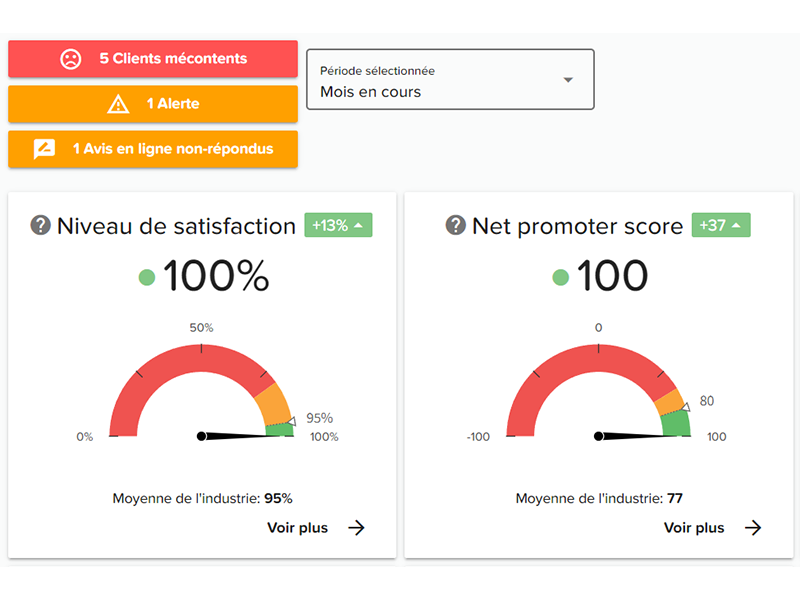
Without such a tool, you won't have any real-time notifications for your customer reviews. You also won't have any way to filter answered reviews, which will ultimately translate into many hours spent manually replying to each online review.
On the other hand, with a solution like InputKit, you'll get centralized management of your online reviews. With an unanswered-review filter and real-time notifications, you'll be able to provide quick and personalized replies to customers based on their satisfaction level and the service rendered. It's a must for your company's good reputation!
12. Asking for a review too late after a purchase
To optimize your e-reputation, it's crucial to ask for online reviews from your satisfied customers. However, it's sometimes complex to know exactly when and how to ask for one. Too soon, the customer might find your insistence suspicious. Too late, the customer will probably already have forgotten their experience, which will hurt the quality of their feedback.
According to best practices, it's recommended to wait one to two hours after the purchase before asking a satisfied customer for a review. This will give them time to evaluate the quality of their experience while writing the review at their convenience. They'll be able to write a precise and detailed review attesting to the quality of your services.
Such feedback is a real goldmine of information for your business, and for search engines too. By analyzing the content of these detail-rich reviews, they can better recommend you to your prospects. That's why it's important to ask for online reviews at the right time!
13. Not suggesting to continue the conversation offline
To deeply understand the reasons behind a negative review, you need to engage in a detailed conversation with the dissatisfied customer. However, we recommend not using your review platforms as a means of communication.
 By talking with a dissatisfied user on your review platforms, you expose the flaws of your experience to potential customers. Plus, a single misplaced comment can spark a real scandal and damage your brand image.
To avoid drawing internet users' attention, invite your dissatisfied customers to continue the conversation offline. For example, share your email address, your phone number, or offer a meeting with a customer service representative. This way, they can express themselves freely and you'll learn more about the reasons for their dissatisfaction. It's a great opportunity to turn your detractors into brand promoters!
14. Asking an unhappy customer to leave a review on your platforms
While it's recommended to encourage your satisfied customers to leave a positive review on your platforms, doing the same with a dissatisfied customer can be harmful for your business.
The unhappy customer will seize the opportunity to leave a negative review on your platforms. A detailed description of an ineffective customer experience will hurt your reputation and discourage your prospects from doing business with you. Moreover, if the invitation is automated, your negative reviews will multiply and seriously hurt your visibility on search engines.
Take care to invite only your satisfied customers to leave you an online review. In case of customer dissatisfaction, why not write an automated invitation to contact your customer support, or even your customer service representative? This will certainly benefit your reputation!
InputKit, the solution to help you manage your online reviews
If you want to simplify your customer review management, InputKit's online review improvement solution is for you!
At the end of every customer questionnaire sent, our solution invites your satisfied customers to leave a positive online review. This way, you'll acquire valuable information to improve your customer experience while increasing your visibility on search engines.
Are you short on time to manage your online reviews? If so, our customer review software is for you!
Our dashboard, paired with an unanswered-review filter, centralizes the management of your customer reviews on your Google Business Profile. This way, you can easily read and respond to your reviews without worrying about forgetting a comment or failing to follow up on customer dissatisfaction. These features are real assets for managing your e-reputation!

To facilitate interactions with your customers, InputKit's solution is also equipped with an artificial intelligence (AI) that responds to customer reviews in a fully automated and personalized way. This integration will save you many hours of management, freeing you up to focus on improving your customer experience. It's a must to maintain your good online reputation!
Schedule my free InputKit demo to optimize my online review management
While managing your online reviews can feel like a real headache, it's possible to optimize your processes. Follow our advice to avoid reproducing some typical examples of poor customer review management.
Regularly monitor your reviews on the various platforms. Rather than deleting your Google reviews, respond to internet users with a professional and empathetic tone. Validate the dissatisfied customer's emotions, then politely invite them to continue the conversation through another medium to avoid unwanted attention. Finally, perform a satisfaction follow-up to make sure the proposed solution meets their needs. Throughout this process, avoid including your company name to keep search engines from sending your prospects to your negative reviews.
To ensure good review management, put a strategy in place to grow your number of customer reviews. Invite your satisfied customers to leave positive reviews at the right time, so you have recent reviews attesting that you're still active and trustworthy. To wrap up, implementing a centralized tool like InputKit will simplify your customer review management. It's a must for your company's reputation.
Do you have a tool to facilitate the acquisition and management of your customer reviews? If you need help, we invite you to schedule a completely free, personalized demo of our solution with our team of e-reputation experts. We'd be delighted to contribute to your business's success!