

- Customer Experience
- September 1, 2022
- 8 min read
3 Customer Satisfaction Metrics You Should Absolutely Track
Customer satisfaction is essential data for any business, but it is not always easy to quantify! With these three customer satisfaction metrics, you can measure how satisfied your customers are and spot new opportunities.
Download now: -> FREE GUIDE Everything about customer satisfaction and the Net Promoter Score
These metrics help you keep a pulse on customer satisfaction.
1. CES, also known as the Customer Effort Score
This relatively recent metric measures how much effort a customer had to expend to get what they wanted from a company.
For example, you want to reach a company to ask a simple question. You call in. You listen to the menu and the long list of departments. None of them match your request. You press 0!
Finally, a human answers with a smile in their voice. Wrong department. You get transferred again. You have already lost thirty minutes, you are getting impatient, and you are losing faith in the quality of that company's service.
The result? You are not convinced you want to keep doing business with them because they are hard to reach.
Nobody wants to chase a company to enjoy its services or products. The lower the effort, the higher the satisfaction!
How do you measure CES?
To do this, the customer answers one simple question that asks them to rate how much effort it took to have their request handled:
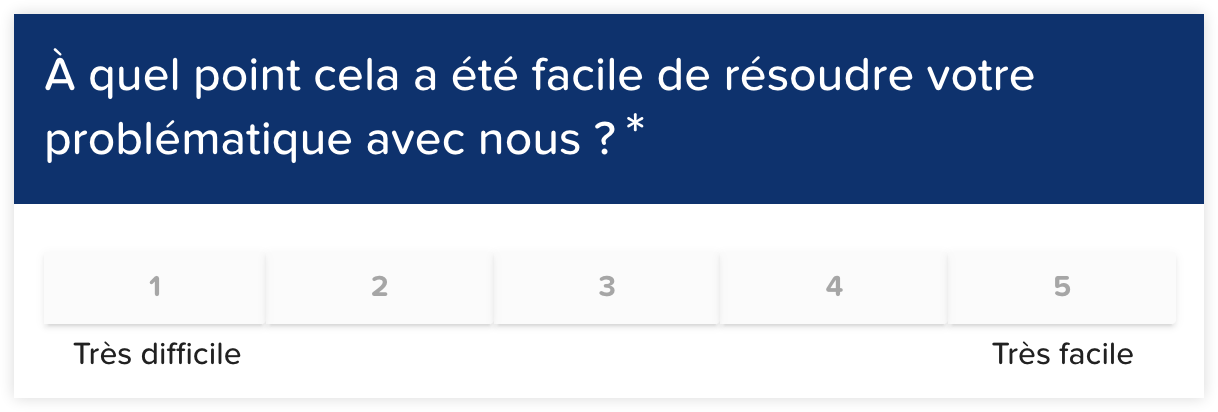
They rate how easy it is to do business with your company on a scale of one to five.
With the results, you get tangible data about the effort your customers must expend to work with you.
It can also be useful to add an open-ended question to collect customer comments! That way you get more detail and can act proactively on what needs to improve to make things as simple as possible for your customers.
We often hear that you should manage customer expectations to avoid disappointment. You should never make a promise you cannot keep, but exceeding expectations by anticipating the next steps in their request is an excellent way to optimize your CES.
2. CSAT, also known as the Customer Satisfaction Score
CSAT is the main metric for evaluating your customers' overall satisfaction. Satisfaction can be quantified with the questions you ask customers after they interact with your business. It helps you identify, across different metrics, what is working well and what needs improvement.
For example, you have a frustrating experience with your mobile phone. Your signal is spotty, you often miss calls, and you lose business opportunities. You visit your carrier and the representative delivers incredible service. They fix most of your issues and show you features you did not know about to make daily life easier! However, they cannot fix your original network issue because it is outside their control, and they point you to the right department to contact.

An hour later, you receive a survey. You are asked to rate your overall satisfaction with your carrier. Thanks to CSAT-style questions, you can express your frustration about the network while also highlighting the excellent service you received!
How do you measure CSAT?
Using simple, closed-ended questions, the customer can give a score from one to five to express their satisfaction with the service or product they purchased:
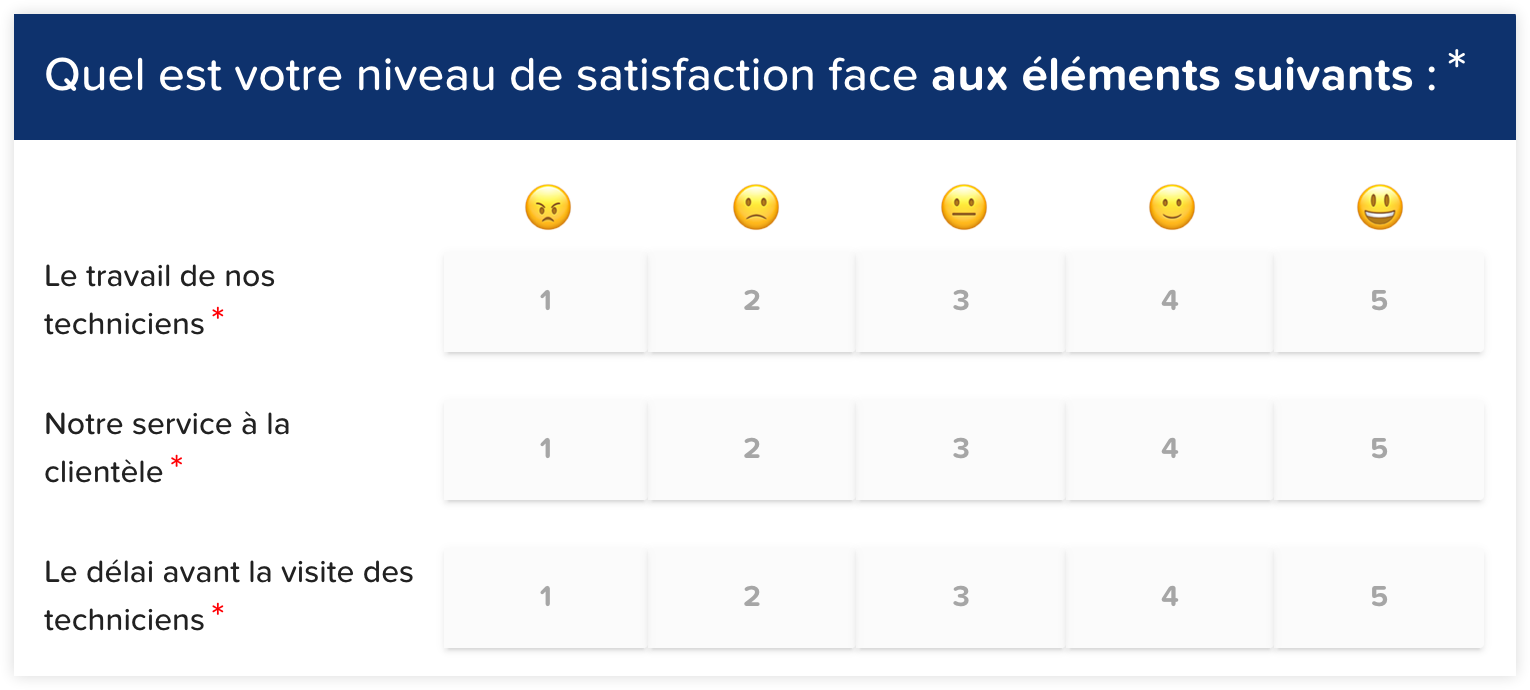
The sooner, the better. To get concrete, honest answers, surveying customers within fifteen minutes of their experience with your business is ideal. This metric will help you pinpoint improvement opportunities to make customers even happier!
3. NPS, also known as the Net Promoter Score
NPS is probably the best-known metric of all! It measures how likely a customer is to recommend a product or service to people they know. It matters because it drives visibility and potential new customers to your business.
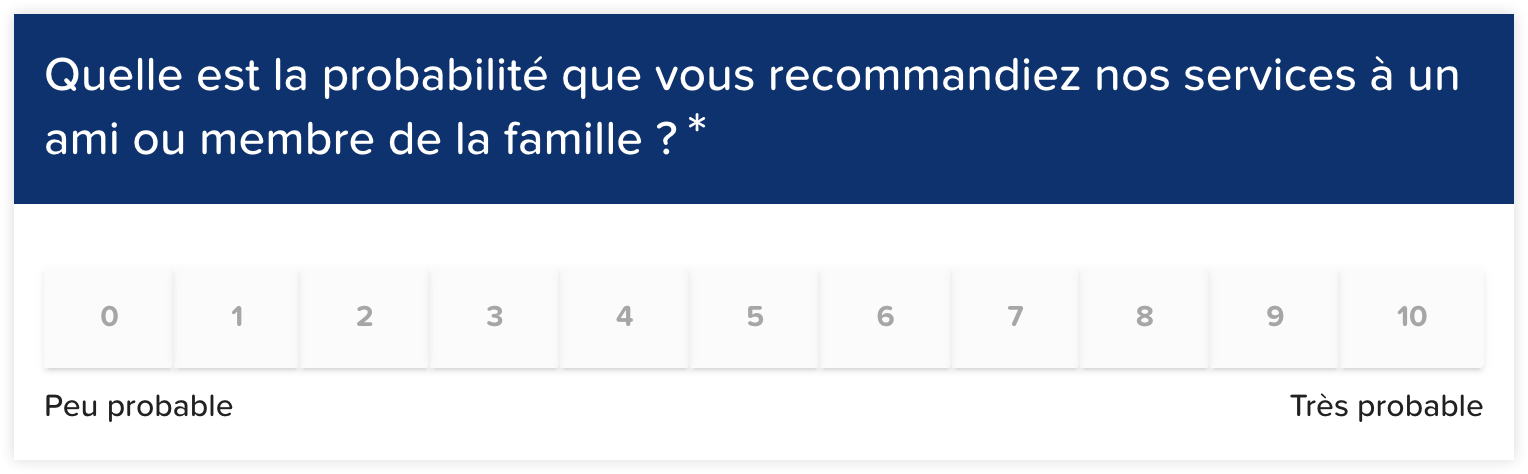
By asking, "How likely are you to recommend our company to a friend or colleague?" you get access to this crucial information and can calculate your company's likelihood of being recommended.
How do you calculate NPS?
NPS is calculated by subtracting the share of detractors (customers who would not recommend you) from promoters (customers who would recommend you to their mother because they loved your service!). The score ranges from -100 to 100.
More specifically, customers who answer "Very likely" become your promoters. The great thing about promoters is that they are the best advertising for your company, and that advertising costs you only one question! Those who answer "Not likely" are your detractors. By identifying them, you can follow up, fix the situation, and turn them into promoters.
Metrics that open new doors
These three customer satisfaction metrics help you measure performance, but they can also open doors and lead you down avenues you have not explored yet.
When you take the time to ask customers for their opinion, you show them they are heard. When you act on the feedback you receive, you confirm that they matter to you, in fact, that they are your priority!
An all-in-one tool to measure your customer satisfaction metrics
We built a modern solution to help business owners track these customer satisfaction metrics in real time! Our InputKit solution includes customer satisfaction metrics and measurement in an automated, personalized way.
FREE GUIDE
Why and how should you track customer satisfaction? Everything you need to know about customer satisfaction and the Net Promoter Score!