

Today, it is important to ask how to measure customer satisfaction. Every entrepreneur understands that the relationship with the customer is the essential foundation of a company's longevity. No customers, no revenue, no employees, no business! On the other hand, when a business relationship exists with a client, it is a sign that there is also satisfaction. A question most entrepreneurs ask is: how do you measure customer satisfaction? In this article, I present best practices for measuring it, as well as the indicators to track and how to make the most of them.
Download now: -> FREE GUIDE 3 examples of successful customer satisfaction questionnaires
Three Ways to Measure Customer Satisfaction
1. The email satisfaction questionnaire
Asking the customer by email or SMS is done quickly after the customer experience (each customer touchpoint), because a real-time response always better reflects reality. The advantage of the questionnaire is to measure customer satisfaction indicators and to obtain feedback on which you can take action. It is recommended to send a short questionnaire, as customers are often solicited for different reasons. It is also good practice not to send two questionnaires to the same customer within a month. For recurring customers, it is recommended to increase this interval to three or six months.
2. The phone
While the email survey can be conducted after each step of the customer experience, the phone survey can only be done once, at the end of the customer experience. Because the phone conversation requires the client's participation at a specific moment, why not take the opportunity to ask questions about their entire experience with your company?
However, be well prepared and remain cheerful and polite! When you call your clients, you will often have the impression that you are bothering them and catching them off guard. That's normal, they don't expect to receive your call.
3. The mystery shopper
This may be one of your customers, or you may enlist the services of an agency. The mystery shopper tests the products and services you ask them to evaluate and provides an honest and precise assessment. Don't hesitate to prepare a comprehensive list of questions to obtain as much information as possible. A mystery shopper gives you an unfiltered view, regardless of the situation. However, you will only have the opinion of a very small sample that may not necessarily represent your overall clientele.
The best approach (according to us)
Among these three options, at InputKit, we prefer email. It is a comprehensive solution that yields more precise results. However, it is essential to follow these conditions:
- The email (or text) and questionnaire must be personalized to the client's situation.
- The questionnaire must be sent quickly after the customer experience (ideally 1 or 2 hours, no more than 48 hours after the experience).
- The questionnaire must be short and easy to complete (maximum 60 seconds, 6 questions).

The Indicators to Measure
CSAT (Customer Satisfaction Score)
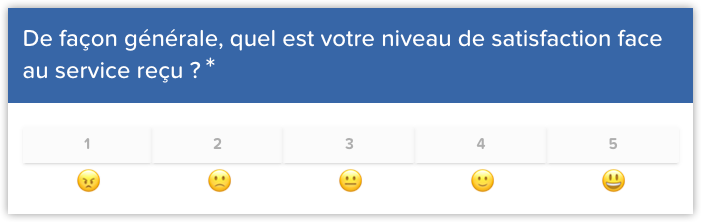
The CSAT (Customer Satisfaction Score) is the primary indicator that comes to mind when asking how to measure customer satisfaction. It is generally measured after the customer experience, for example after a clinic visit or following appliance delivery. The question and answer are brief: "Are you satisfied?" The response ranges from 1, "not at all satisfied," to 5, "very satisfied." Sent within fifteen minutes of the customer experience, the CSAT is practical for solving problems, improving your processes, and evaluating your customer service.
NPS (Net Promoter Score)
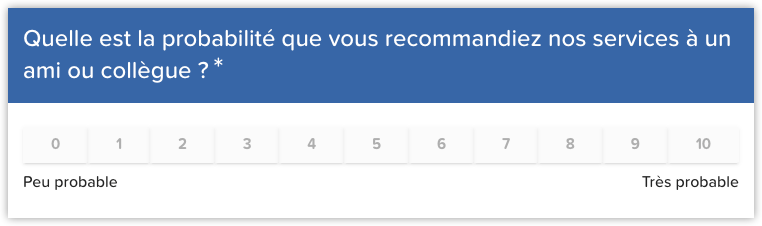
The NPS (Net Promoter Score) measures a customer's intention to recommend your business. In response to the question "How likely are you to recommend our product or brand?", they answer on a scale from 0 to 10, from "not at all likely" to "very likely." You can then classify your customers into three categories: promoters (9 and 10), passives (7 and 8), and detractors (0 to 6). The NPS drives sales, product improvement, and customer loyalty. A report by Advocacy Drives Growth (London) shows that an average increase of 7% in NPS leads to a 1% increase in sales.
CES (Customer Effort Score)
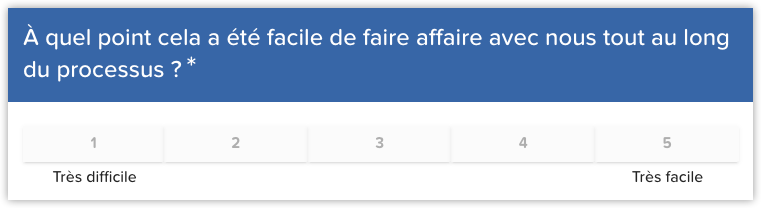
More recent, the CES (Customer Effort Score) evaluates the effort a customer had to make to get what they wanted. The question is simple: "How much effort did you have to put in for us to handle your request?" The customer answers between 1 "little effort" and 5 "a lot of effort." Of course, the easier the customer's task, the more positive their experience will be. A Harvard Business Review study shows that 94% of customers who answered "little effort" are ready to make a repeat purchase and 88% could spend more at the same place. Conversely, 81% of those who answered "a lot of effort" plan to write a negative review about their experience.
Making the Most of It
For these systems to be effective, a few important principles must be considered. First, the survey must be sent to the customer following a specific step in their journey and shortly after their experience, while everything is still fresh in their memory. You can also launch surveys regularly to analyze the evolution of customer satisfaction. Why not invite customers who give high scores to take an additional action, such as reviewing your business on an app? Finally, a questionnaire sent by email to well-identified clients produces a more meaningful result than one on a website, where respondents may not actually be your customers.
The Analysis
The final step is to collect these statistics and analyze them. They will give you a wealth of information. Based on the results obtained, you can better segment your clientele and take actions that promote your improvement.
You can also detect many negative comments following a specific experience, such as the launch of a new product. It is then easier to verify internally what went wrong and correct it. Conversely, it will be easier to identify your promoters (customers who are delighted with their experience) and launch a reward or loyalty program. This will have the effect of bringing along other customers who are more undecided or discreet about their experience.
In Summary
Thanks to the efficiency of modern survey systems, any entrepreneur can easily evaluate their relationship with their clientele. One of the great advantages of these surveys is that they allow dissatisfied customers to express themselves, all with the aim of improving as a business.
By classifying and analyzing your results, it will be easier to determine the strategy to adopt for maintaining your company's good reputation according to your objectives. A simple, effective, and rewarding approach! Happy surveying!
A Tool to Measure Your Customer Satisfaction
We have developed a modern solution to help entrepreneurs answer the question: How to measure customer satisfaction? Our InputKit solution allows you to measure customer satisfaction in an automated and personalized way.